
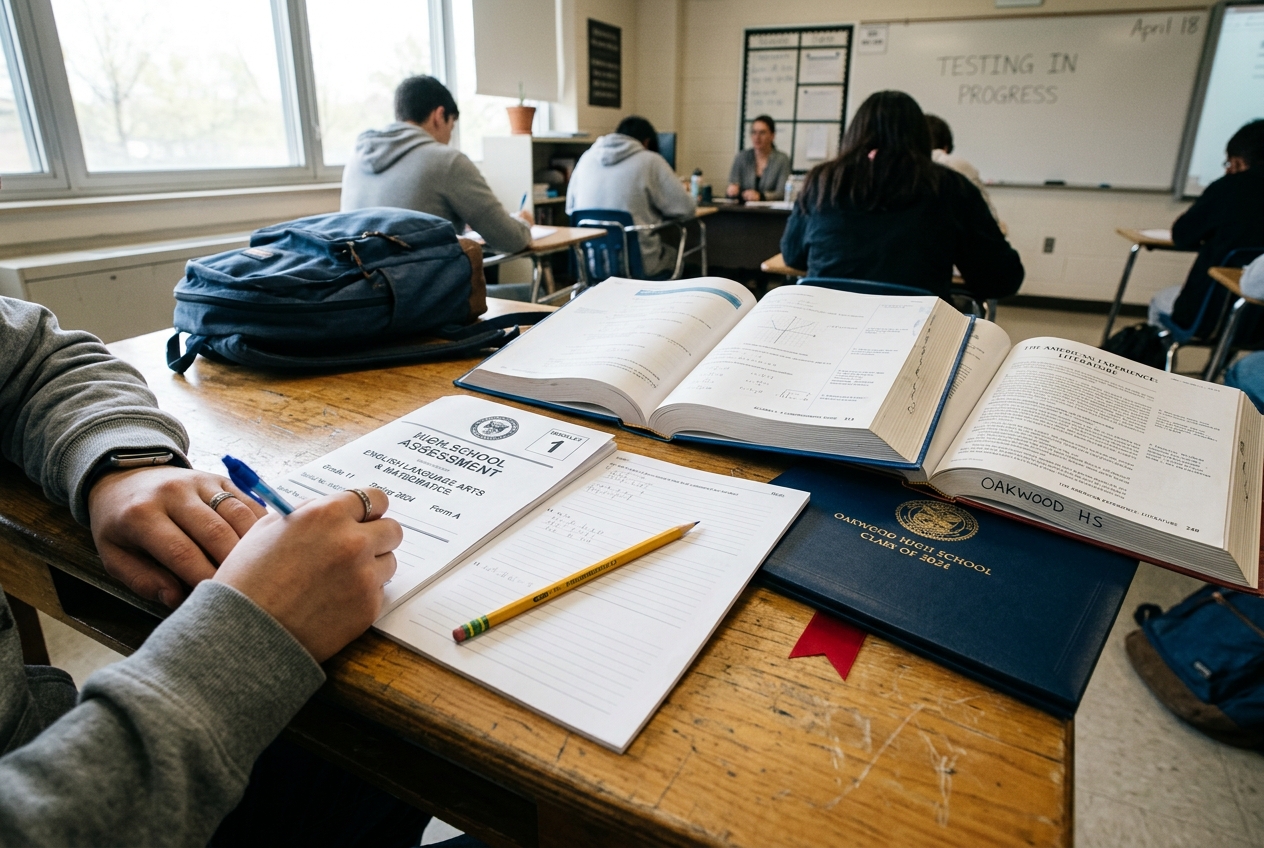
In a move that highlights the ongoing erosion of academic accountability in Oregon public education, state officials have confirmed that high school students will not be required to demonstrate basic proficiency in reading, writing, or mathematics to earn a diploma through at least the 2027-2028 school year.
The suspension of the state's 'Essential Skills' graduation requirement, originally enacted by the Oregon Legislature under Senate Bill 744, was initially pitched during the pandemic as a temporary pause. However, state education officials have repeatedly extended the moratorium, arguing that standardized testing and basic competency requirements create 'disparate outcomes' and harm 'educational equity.'
While progressive education bureaucrats celebrate the removal of testing hurdles, parents, employers, and higher education institutions across Oregon are left asking a fundamental question: what does an Oregon high school diploma actually represent if a graduate cannot demonstrate basic literacy and numeracy?
The Ideological Shift: From Excellence to 'Equal Outcomes'
For decades, Oregon required high school seniors to prove basic competency in foundational academic skills before receiving a state-certified diploma. Students had multiple pathways to meet the standard, including statewide summative tests (OSAS), ACT or SAT scores, or locally scored classroom work samples.
Under Senate Bill 744 and subsequent State Board of Education rules, that foundational requirement was discarded. The underlying philosophy driving this policy is rooted in ideological equity theory: rather than investing resources to help struggling students master basic reading and math, the system simply eliminates the measurement altogether to conceal unequal outcomes.
This approach treats academic standards not as essential benchmarks for adulthood, but as arbitrary barriers. The result is a system that prioritizes graduation statistics over genuine student achievement:
- Inflated Graduation Rates: Districts boast record graduation percentages while state and national assessment scores reveal that more than half of Oregon 11th graders are not proficient in grade-level English or mathematics.
- Unprepared Graduates: Community colleges and four-year universities in Oregon report rising rates of incoming freshmen who require non-credit remedial coursework just to read and calculate at college entry levels.
- Workforce Readiness Deficits: Local trade unions and business leaders have voiced growing alarm that recent high school graduates struggle with basic blueprint reading, arithmetic, and professional communication.
Who Suffers When Standards Are Lowered?
Proponents of eliminating graduation standards claim they are protecting minority and low-income students from systemic bias. In reality, lowering expectations does the greatest harm to the very students advocates claim to champion.
When a school district hands a diploma to a student who cannot read proficiently, it is not an act of compassion. It is an abdication of duty. A diploma without verified skills sends young adults into the workforce or higher education with a false sense of security, only to face immediate disadvantages in the real world.
True compassion and authentic equity require holding every child to high standards while providing the rigorous instruction, structured phonics, and disciplined tutoring necessary to help them succeed.
The Contrast: New Course Mandates vs. Basic Skills
While the Oregon Department of Education has eliminated basic reading and math testing through 2028, the state has simultaneously added new mandatory course requirements for the Class of 2027, including specialized credits in career pathway skills and personal financial education.
While financial literacy is valuable, critics point out the absurdity of teaching advanced financial concepts or career portfolios to students who have not been required to demonstrate basic arithmetic or reading comprehension. Adding specialized electives while gutting core academic foundations is like painting the walls of a house with a crumbling foundation.
Restoring Sanity to Oregon Education
Oregon ranks near the bottom nationwide in key educational indicators, including chronic absenteeism, student mental health, and math proficiency. Continuing to suspend basic graduation standards will only accelerate this decline and drive more families away from public schools.
To reverse course, parents and taxpayers must demand accountability:
- Reinstate Objective Standards: Urge state lawmakers and the Oregon State Board of Education to reinstate objective, verifiable Essential Skills requirements for all high school diplomas.
- Prioritize Classroom Fundamentals: Demand that school boards direct resources away from expensive equity consultants and administrative bureaucracy, refocusing funds on direct classroom instruction, phonics-based reading, and math intervention.
- Hold School Boards Accountable: Support local school board candidates who believe in academic excellence, transparent accountability, and preparing students for the demands of the real world.
A high school diploma should be a badge of real achievement, not a participation certificate. It is time for Oregon to raise the bar, not erase it.